
On this page
The cheaper guard options
Call (470) 326-1690 and an independent contractor can show you which ones suit the trees around your house.
| Option | How it works | Keeps out | Lets in |
|---|---|---|---|
| Snap-in screen | Wire or plastic grid over the trough | Big leaves | Straw, seeds, grit |
| Punched aluminum cover | Rigid sheet with holes | Leaves, most seeds | Needles, if holes are large |
| Curved hood | Water wraps round the nose into a slot | Leaves | Grit; overshoot in a cloudburst |
| Foam block | Fills the trough | Some leaves | Slows water; traps debris |
| Brush insert | Bristles fill the trough | Some leaves | Needles snag in the bristles |
Where pine straw wins
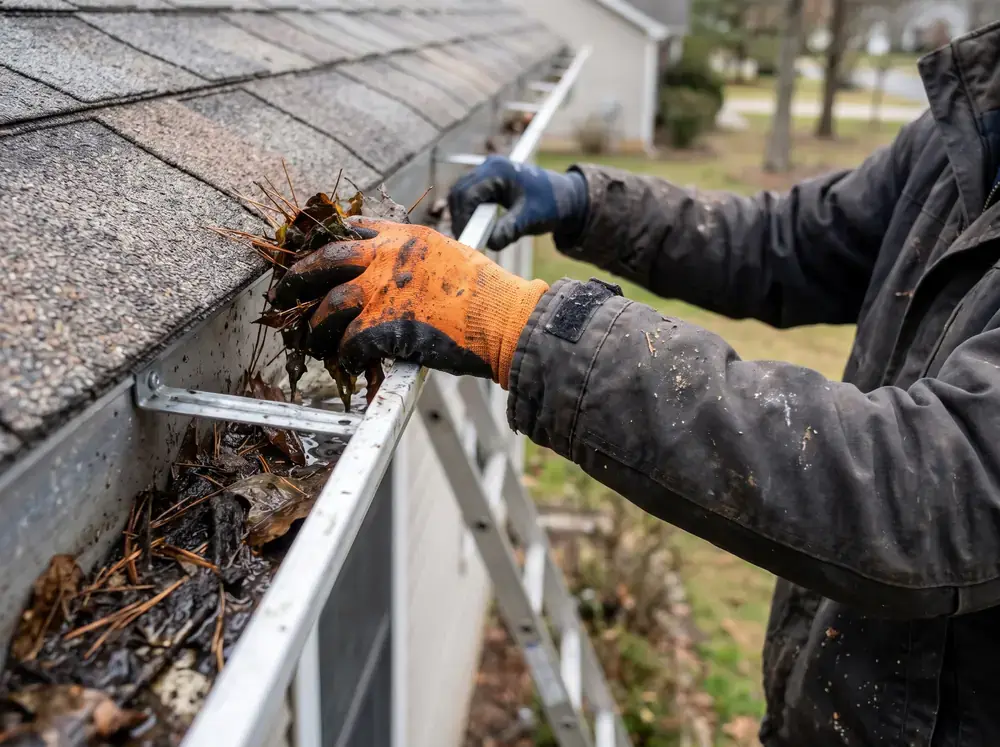
Needles are thin and stiff, so they thread through any opening bigger than they are, end first. Under the screen they settle across the outlet. From the driveway the gutter looks tidy; inside, it is plugged. That is why most screens and covers do well under oaks and maples and poorly under pines. See micro-mesh gutter guards for the alternative.
Cloudburst behavior
NOAA's atlas gives a 10-year, five-minute burst near Buford of about 7.94 inches an hour. Open screens and punched covers pass that if they are clean. Curved hoods depend on water clinging to the nose; in the heaviest rain, some of it overshoots the gutter altogether. Foam and brush inserts slow the flow and can cause spills of their own.
Spring pollen on covers
The yellow dust is mostly pine pollen, and in rain it can paste itself over small holes and along the nose of a hood. A rinse once the season ends keeps water moving.
Good places for them
- Oaks and maples only, no pines overhead.
- Single-storey eaves, where lifting a screen is a two-minute job.
- Porches, carports, sheds and garages with light debris.
- A stopgap while you plan new gutters.
Poor places for them
- Under pines.
- On steep roofs that shed water fast, where hoods can overshoot.
- Anywhere foam or brush inserts would sit in wet debris.
- Where a hidden clog would go unnoticed until the gutter spills.
Is yours failing?
Watch in a moderate rain: water coming over the front while the downspout barely runs means a clog underneath. After leaf fall, lift a section beside each outlet and look. A layer of needles under the screen says it is time to clear it, or to step up to fine mesh. Snap-in screens come off easily, so upgrading a sound gutter later is simple. See gutter guards and are gutter guards worth it?.
Price compared with mesh
Screens and punched covers sit at the bottom of the price range, and snap-in types are a homeowner job on low eaves. Stainless micro-mesh costs more, lasts longer and is the only one of the group that stops straw.
Keeping a hood clean
Pollen and grit stick to the curved nose and collect in the slot. Cleaning means brushing the curve and running something thin along the slot, from a ladder, which on a mossy or pollen-heavy roof can be needed as often as clearing an open gutter.
What the quote should list
The product by name, the gutter size it is made for, how it fixes, whether the gutter will be cleaned and resealed first, a per-foot price and the warranty terms. Lay it beside a mesh quote to see the real gap.
Ice and snow
Solid covers let ice and snow slide straight off the eave. Think about where that will land, and keep it off steps and paths.
Testing a cover in your own yard
Before committing the whole house, some owners have one run fitted and watch it through a pollen season and a few storms. A cheap trial on the worst run tells you more than any brochure.
Sheds and outbuildings
Screens suit low, short runs on sheds, workshops and carports with light debris, where lifting them to clean takes a minute.
Pollen
A spring rinse keeps holes and slots open after the pollen season.