
On this page
- A proper clean, item by item
- What fills gutters around Buford, and when?
- How often should you clean?
- Why does cleaning matter more in a downpour climate?
- What else does standing water cause?
- Is DIY cleaning safe?
- What about buried downspout lines?
- What should you ask a cleaner?
- Would guards save money?
- Visit length
- Winter cleaning
- Cleaning plus repairs
- Between visits
- Getting the house ready
- Typical finds
- Roof cleaning
- What a fair cleaning quote includes
- Pine-heavy lots
- Gate codes and pets
A proper clean, item by item
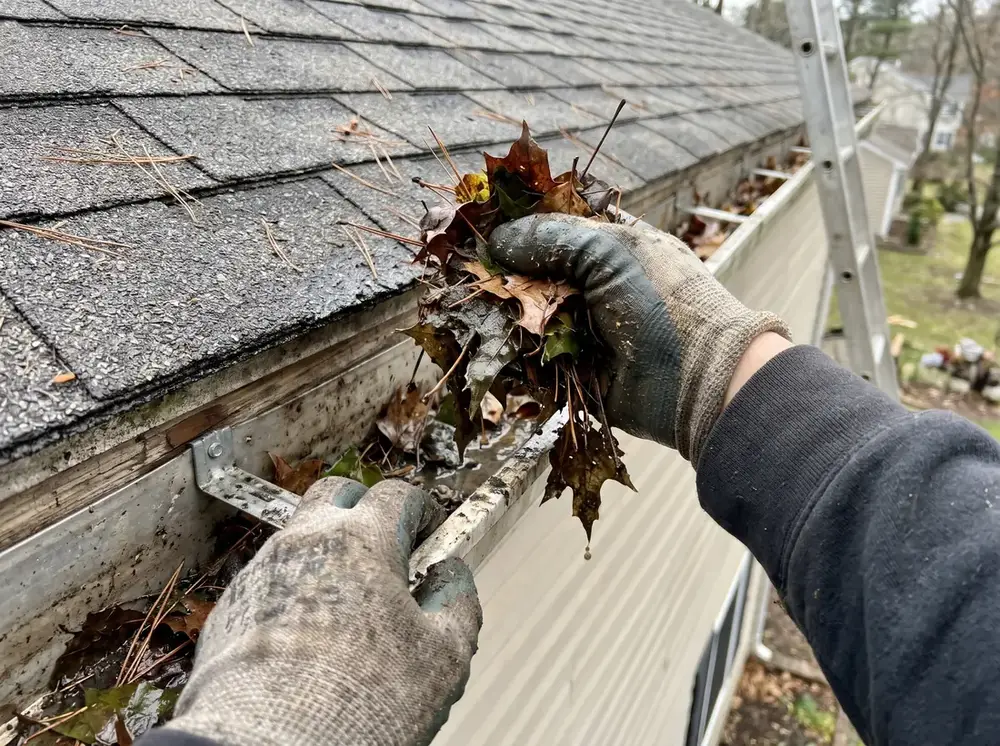
More than scooping the trough. Dial (470) 326-1690 to reach an independent local crew who cleans gutters around Buford.
| Step | Why |
|---|---|
| Scoop the trough | Removes needles, leaves and seed balls |
| Clear each outlet | Outlets clog first, often under a mat of pine straw |
| Check the top elbow | Sweetgum balls and acorns jam here |
| Flush with water | Shows whether everything drains |
| Flush buried lines | Silt and needles settle in pipes |
| Look along the run | Finds sags, leaks and loose hangers |
| Bag the debris | Keeps it off beds and lawns |
What fills gutters around Buford, and when?
| Season | What falls | Notes |
|---|---|---|
| Late winter | Pine straw, twigs from ice and wind | Check after any ice storm |
| March and April | Pine pollen, oak catkins, maple seeds | Pollen turns to sludge in rain |
| Summer | Pine straw, storm debris | Thunderstorms find every blockage |
| Autumn | Oak, maple and poplar leaves, sweetgum balls, acorns | The biggest single load |
Spring pollen deserves its own mention. Atlanta recorded a 35-year high of 14,801 in March 2025, and the yellow coating on cars is mostly pine pollen. On a roof, it washes into the gutter with the first rains and settles as a fine sludge that binds needles together at outlets.
How often should you clean?
| Trees over the roof | Cleanings a year | When |
|---|---|---|
| None | 1 to 2 | Late autumn; spring rinse optional |
| Oaks and maples | 2 | Late autumn and late spring |
| Some pines | 2 to 3 | Autumn, spring, mid-summer check |
| Heavy pines | 3 to 4 | Autumn, late winter, spring, summer |
| With good micro-mesh guards | Brush guards yearly | After pollen season |
See how often to clean gutters.
Why does cleaning matter more in a downpour climate?
Because a blocked gutter fails at exactly the wrong moment. NOAA's atlas gives a 10-year, five-minute storm near Buford of about 7.94 inches an hour. In a storm like that, a clean, well-sized gutter is working hard. A gutter with a blocked outlet overflows in seconds, dumping water along the foundation, often beside a basement wall in red clay that drains slowly.
What else does standing water cause?
- Mosquitoes. A blocked gutter that holds water after rain can become a breeding spot in warm months.
- Rot. Wet debris keeps the gutter back and fascia damp.
- Weight. A trough of wet pine straw and leaves pulls on hangers.
- Termites. UGA Extension points to small trees growing in gutters as a sign they need cleaning, and advises keeping gutters draining away from the house because termites need moisture.
Is DIY cleaning safe?
On a single-storey eave, with a stable ladder, a stand-off and a helper, many homeowners manage it. Do not lean a ladder on the gutter, do not walk on a roof dusted with pollen or wet with dew, and keep clear of power lines. On two-storey eaves and the tall back of a basement home, call a contractor.
What about buried downspout lines?
Many homes here send downspouts into pipes in the ground. Needles, grit and pollen sludge settle where the line flattens or bends. Once a year, put a hose down each downspout. If water backs up or does not appear at the outlet, have the line flushed or scoped. See downspout repair.
What should you ask a cleaner?
- Do you flush downspouts and buried lines?
- Do you bag and remove the debris?
- Will you report sags, leaks or loose hangers you find?
- Do you carry liability insurance?
- How do you reach tall eaves, and do you walk on roofs?
Would guards save money?
Under pines, often yes over time. See gutter guards and are gutter guards worth it?.
Visit length
A few hours on a typical house; longer for tall eaves, heavy straw or lines that need flushing.
Winter cleaning
Fine on dry days. Skip frosty mornings and icy roofs.
Cleaning plus repairs
The crew is already up the ladder, so it is a good moment to reseal a corner, add a bracket or refit a downspout. Get small repairs priced before they start.
Between visits
| Watch for | How |
|---|---|
| Spills | Look out during a heavy rain |
| Downspout flow | Strong stream at the bottom |
| Standing water | Dips and stains |
| Buried lines | Annual hose test |
| Guards | Leaves and pollen film on top |
Getting the house ready
Clear a path, move pots and furniture, say which corners spill and which downspouts back up, and point out clean-outs.
Typical finds
- Outlets buried under straw with water ponded behind.
- Seedlings sprouting in the trough.
- A corner dripping or a bracket loose, spotted on the way past.
- A downspout knocked off at the bottom.
- A buried line that will not take water.
A good cleaner tells you about these rather than leaving them for the next storm to reveal.
Roof cleaning
Gutter cleaning normally includes the eave strip and valleys, not the whole roof. Ask if you want more.
What a fair cleaning quote includes
A clear price for the whole house, whether downspouts are flushed, whether buried lines are tested, how debris leaves the property, and whether a short note on drips and loose brackets comes with it. A low number that leaves straw in bags by the driveway, or skips the downspouts, is not the bargain it looks.
Pine-heavy lots
Ask for a price per visit on a recurring plan. Under thick pines, two visits seldom cover a year.
Gate codes and pets
Leave gates unlocked, pass on any gate code, and keep dogs inside while the crew works.